QR codes on

Magazines & newspapers

One code that can keep pointing at something current long after this issue is off the newsstand.

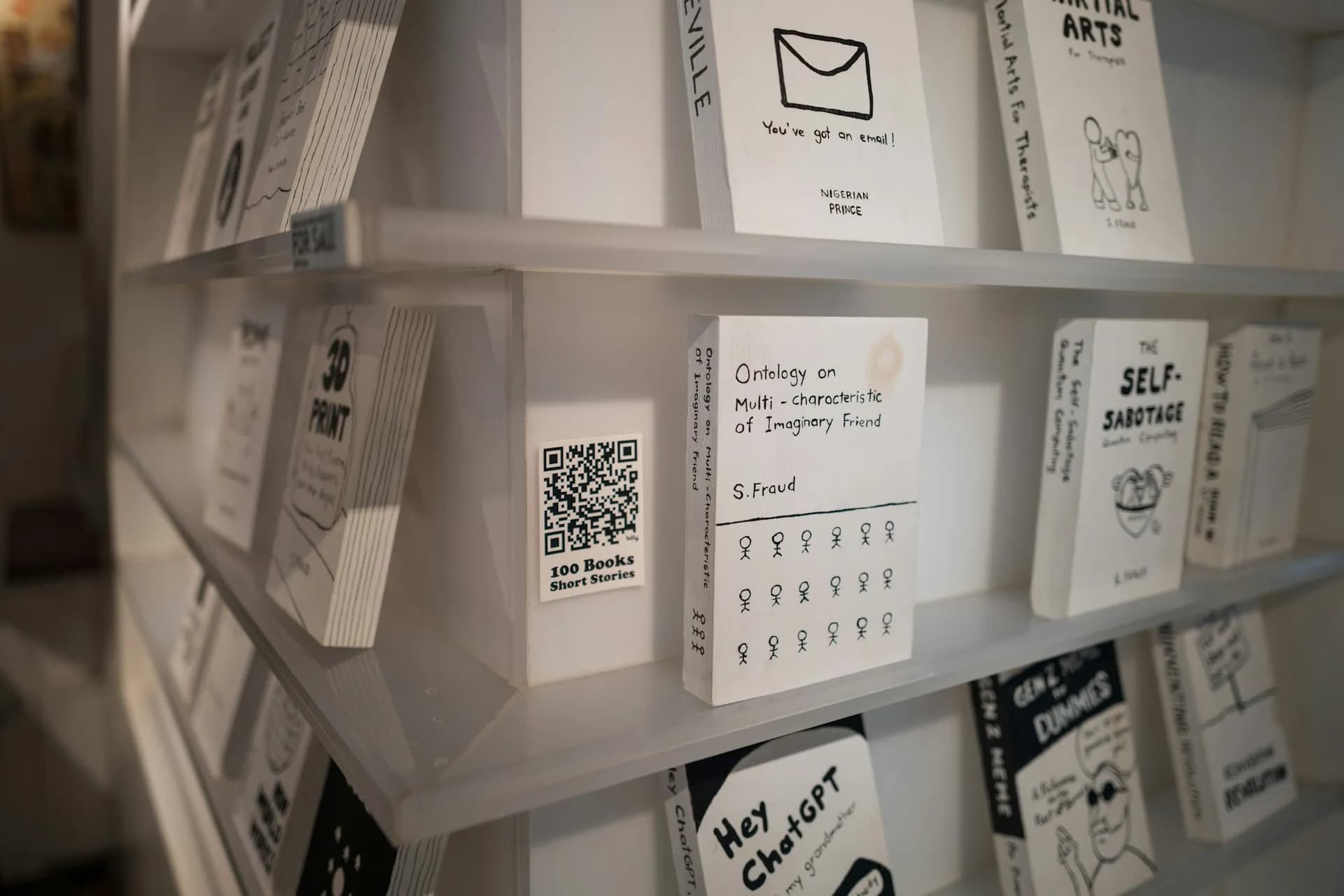
Shelves of printed greeting cards and booklets, several with QR codes on the front.

Best QR type for this

Landing page

A magazine or newspaper placement is usually promoting one specific thing inside a much bigger publication — a companion video, an extended interview, a subscription offer — and a Landing Page gives that one thing its own page instead of routing a reader through a homepage they'd have to search. Because the print piece itself can't be edited once it's run, the destination behind the code is the only part of the experience still left flexible.

Design considerations for print

Dynamic vs. static, for magazines & newspapers

Dynamic, and not a close call. A single issue can be read the week it's published, found in a waiting room six months later, or pulled from a library archive years after that — the print itself doesn't expire even though the publication schedule moves on weekly or monthly. A static code locks the destination to whatever was true at press time; a dynamic one lets that copy from three years ago still point somewhere useful instead of a dead campaign page or an offer that ended in a different fiscal year.

A worked example

A code held at 35cm sits well inside the 10:1 rule at 25mm — scannable to roughly 250cm away, far more margin than actually needed. But that number assumes magazine-stock printing. Move the same 25mm code onto newsprint and the formula stops accounting for what absorbent paper does to the print itself, which is the actual limiting factor at that size.

Newsprint's ink bleed problem

Every print size guide on the internet uses the same 10:1 distance-to-size rule, and it's a good rule — but it assumes the printed square itself is crisp, and that assumption quietly breaks down on newsprint. Newsprint is cheap, thin, and highly absorbent by design; that's what lets a newspaper print millions of copies overnight on a web offset press at a price that makes daily publication possible in the first place. The tradeoff is that ink doesn't sit on top of the fiber the way it does on coated magazine stock — it soaks in, and it spreads a small amount as it does. On body text, that spread is invisible; letterforms are large and forgiving enough that nobody notices a hairline of bleed. A QR code has no such margin. Its whole function depends on a scanner's camera drawing a hard line between a black module and the white square next to it, across a grid of modules that might only be a millimeter or two wide each at typical print sizes.

Ink bleed doesn't destroy a code outright — it erodes the contrast at every module boundary a little at a time, and because a scanner is doing edge detection across dozens of these boundaries simultaneously, small individual losses compound into a code that fails to resolve at all, especially at the smaller end of a size range that would work fine on coated stock. The practical fix isn't a special version of the code — it's simply refusing to reuse a magazine-stock size floor on a newsprint job. Add roughly 10–15mm over what coated stock would need, and that extra size gives the bleed room to happen at the module edges without erasing the contrast a scanner is reading. It's a five-minute decision at layout time, and an unscannable code at the newsstand if it's skipped.

Common mistakes

How to do it

  1. 1

    Pick coated or newsprint

    This decides your size floor — coated stock holds fine detail; newsprint needs a meaningfully larger code to survive ink bleed.

  2. 2

    Keep it inside one panel

    Never let the code cross a gutter, fold, or column break.

  3. 3

    Proof on the real press

    A home laser proof doesn't predict how a web offset press will render the code on newsprint.

Frequently asked

Does newsprint need a bigger QR code than magazine paper?
Yes. Newsprint is more absorbent than coated magazine stock, so ink bleeds slightly into the fibers and softens fine module edges. Sizing newsprint codes larger than you would on glossy stock compensates for that.
Can a QR code go across a magazine's two-page spread?
Avoid it. The gutter — where the two pages meet and the physical fold sits — distorts whatever's printed across it, and a code split by a crease routinely loses enough modules to stop scanning.
Should a magazine or newspaper QR code be dynamic?
Almost always. Print copies get archived, passed along, and re-read well after the issue's cover date, so a destination that was accurate at press time can easily be wrong by the time someone actually scans it.
How far should a magazine QR code be readable from?
Design for reading distance — roughly 30–40cm, since a magazine or newspaper is normally held open in both hands rather than viewed from across a room.

Related materials

Relevant QR types

Ready to print one?

Free to generate, free to download.

Create your Landing page QR code