QR codes on

Board games

A box that stays in circulation, resold and replayed, for years after its release.

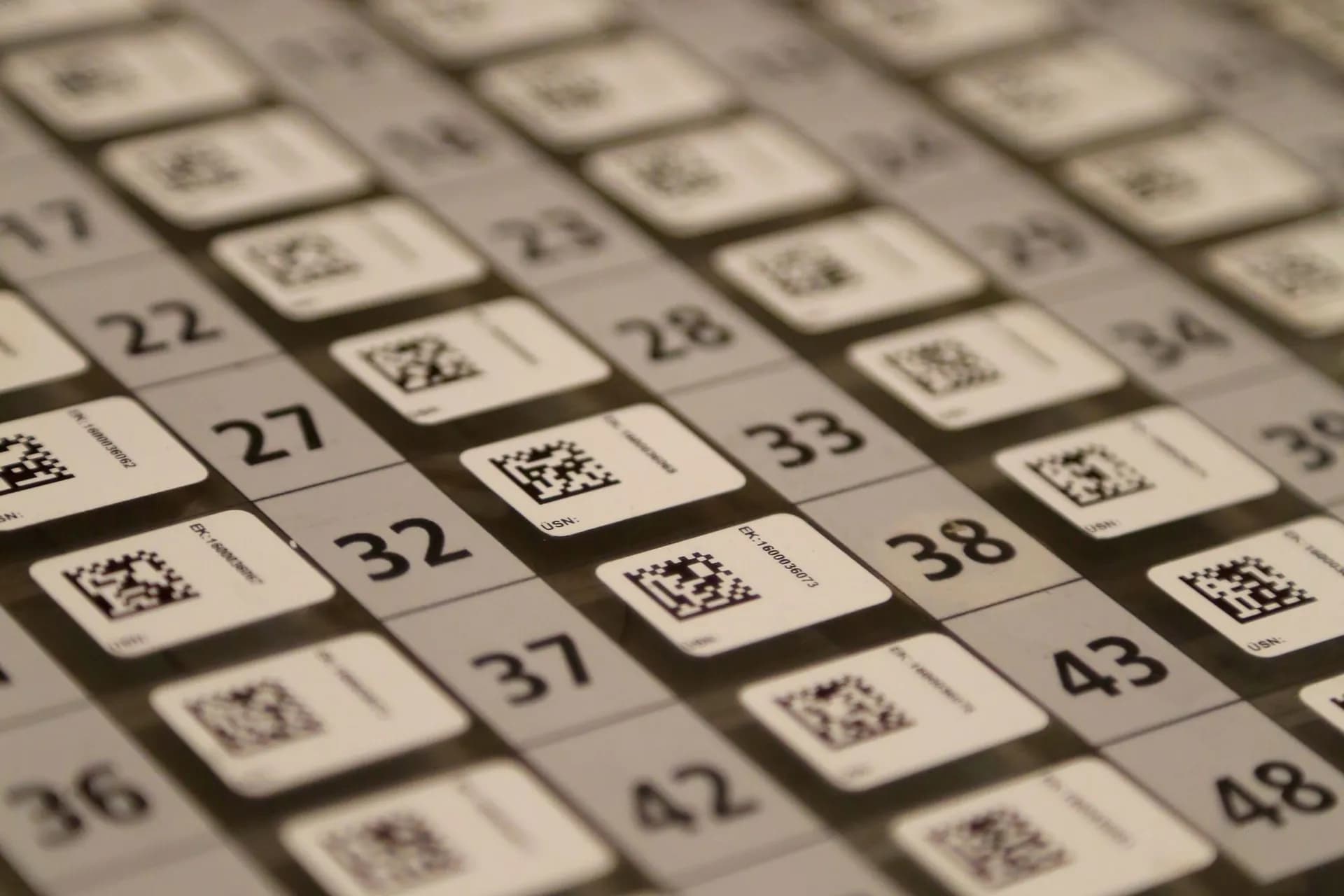
Rows of numbered tiles, each printed with a small QR code.

Best QR type for this

PDF

Board games routinely need a rulebook correction, an errata sheet, or expansion content that didn't exist at print time. A PDF type gives a code somewhere to send the current rules or an official errata, which matters more for a game than almost any other product category — misprinted or outdated rules directly affect whether the game plays correctly.

Design considerations for print

Dynamic vs. static, for board games

Dynamic, and for a reason specific to how games actually get played: board games routinely receive rules clarifications, balance errata, and expansion content well after a box first ships, and unlike almost any other packaged product, a board game keeps getting actively used — and resold, gifted, or passed down — for years after its original release. A static code locked to launch-day rules leaves every copy still in circulation, including secondhand ones bought long after the original run, pointing at outdated information. A dynamic code lets the destination carry current errata and expansion links for as long as the game stays on someone's shelf, which for a well-loved game can be a very long time.

A worked example

At 38cm, the 10:1 rule needs a 3.8cm floor — 20–25mm on a box-front code covers that with room to spare for shelf-browsing distance. A rules-insert code, read up close during setup at maybe 20–25cm, can drop to 15–18mm and still clear the same rule comfortably, which is why this surface reasonably supports two different size floors depending on where exactly the code sits.

The longest secondhand shelf life in this guide

Most packaged products have a fairly predictable window of relevance: sold, used up or worn out, replaced. A board game breaks that pattern more than almost anything else covered in this guide, because a well-designed board game doesn't get consumed — it gets played repeatedly, stored between sessions, and very often resold, gifted, or handed down once the original owner is done with it, sometimes years or even decades after its original release. Board game resale and secondhand trading is an established, active market in a way that doesn't really exist for, say, a bag of chips or a bottle of shampoo, and that changes what "print lifespan" actually means for a code on this surface.

A code printed on a game box at launch is designed, reasonably, around what's true at that moment: current rules, current errata status, whatever expansion content exists at the time. But that same box might still be circulating — bought secondhand at a game night, inherited from a friend moving apartments, picked up at a thrift store — five or ten years later, and the game itself hasn't changed even though the surrounding information almost certainly has. Rules get errata'd as players find edge cases the original text didn't anticipate. Expansions get released that meaningfully change how the base game is recommended to be played. A digital companion app might launch years after the physical game did. None of that reaches a box that's already sitting on a shelf unless the code on it can be repointed.

This is a case where the practical argument for a dynamic code isn't really about print economics — it's about a product category that's unusually likely to still be in active use long after most comparable packaged goods would have been thrown away. A code that stays useful for the entire realistic lifespan of a board game, not just its first printing, is doing the job this surface actually needs, and that lifespan is measured in years far more often than it is for almost anything else in this guide.

Common mistakes

How to do it

  1. 1

    Pick box or insert

    A box-front code needs to hold up at shelf-browsing distance; an insert code can be smaller since it's read up close during setup.

  2. 2

    Clear the required labeling

    Keep the code off age ratings, warnings, player-count callouts, and the barcode.

  3. 3

    Link to a maintained rules PDF

    Point at a destination that can carry errata and expansion updates for as long as the game stays in print and in circulation.

Frequently asked

How big should a QR code be on a board game box?
20–25mm on the front or side panel for shelf-browsing distance, or 15–18mm on a rules insert read up close during setup.
Why do board games need dynamic QR codes more than most packaged products?
Games routinely get rules clarifications, balance errata, and expansion content after release, and they also stay in active circulation — resold, gifted, passed down — for years. A dynamic code keeps that information current for as long as any copy is still being played.
Where shouldn't a QR code go on a game box?
Over required labeling like the age rating, choking hazard warning, player count, or the barcode — keep it on a clear panel instead.
Should a board game's QR code link to a webpage or a PDF?
A PDF suits rules and errata well, since players expect a document they can reference directly rather than a general marketing page.

Related materials

Relevant QR types

Ready to print one?

Free to generate, free to download.

Create your PDF QR code